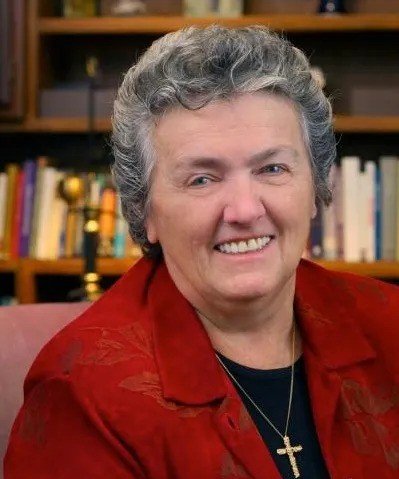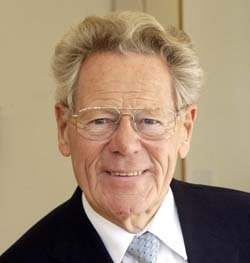
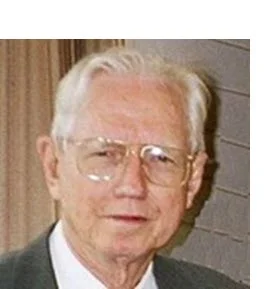
We began the year with the loss of one of our dearest members: John Wijngaards. His Wijngaards Institute for Catholic Research will live on under the capable guidance of Luca Badini and Miriam Duignan. They will carry on his work to establish a Constitution for the Catholic Church while advancing gender equality, sexual ethics, and lay decision-making in the Catholic Church.

With worldwide outrage over the U.S. presidential election, we held a four-part series entitled 1933 Germany: Are we repeating history? The series opened with historian Dr. Jon Rosebank, offering salient points of how Adolf Hitler rose to power during the Nazi regime. And how the Trump administration is following a close pattern. Our objective in this series was to serve as a wake-up call to Americans who may have been going along with Donald Trump’s policies without realizing what is really happening. Now, many months later, more and more Americans are becoming aware!
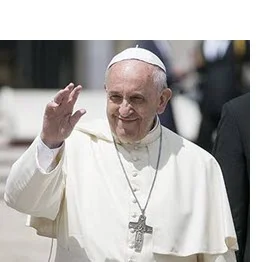
At the end of April, we lost our dear Pope Francis after appearing in St. Peter’s Square the day before his death. His pontificate lasted from March 13, 2013, until his death on April 21, 2025. He was the first Jesuit pope, the first Latin American, and the first born or raised outside Europe since the 8th-century Syrian pope Gregory III. He will be remembered for having introduced synodality into the Church, i.e., the bishops, clergy, and people working together.
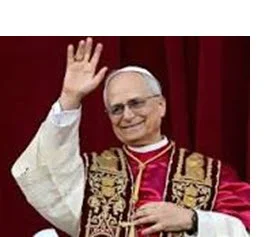
In May, we welcomed Pope Leo XIV as our new pontiff. The first Augustinian Pope, Leo XIV, is the second Roman Pontiff from the Americas, after Pope Francis. He is the first American pope, though he spent many years as a missionary in Peru before being elected head of the Augustinians for two consecutive terms. Taking up the banner of Pope Francis, he continues to support synodality in our Church strongly.
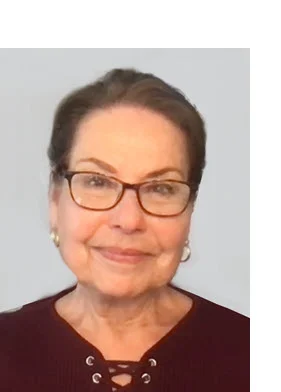
Dr. Ariane David guided us through a transformative process into non-positional thinking. She taught participants how to have a conversation with someone of opposite viewpoints without it ending in a knock-down, drawn-out, screaming match. Without losing our values, we learned how to replace the reflex to blame with genuine curiosity and an openness to listening without needing to convert them. We learned how trust can be built through understanding rather than argument, and how this practice can be applied to political, religious, and everyday conversations with equal effectiveness.

CCRI Young Seekers shared the challenges they face in the Church and broader society, as well as their ongoing work in social and climate justice. Their voices brought fresh perspectives, deep concerns, and hopeful visions, essential to our shared journey toward a more inclusive and responsive Church.
Reform organizations across the world issued an open letter to Cardinal Fernández and Study Group 5 established in 2024 by Pope Francis, expressing deep outrage at the concealment carried out by Cardinal Petrocchi and the 2020 Second Commission established to determine the authenticity of Women’s Diaconate.
As documented by America Magazine, the Commission had already voted overwhelmingly in 2022—after only two sessions—to exclude women from the sacramental diaconate, then halted its work without informing the Faithful or the 2023–2024 Synod delegates. Upon learning this in late 2025, global reform groups called on Cardinal Fernández to extend the deadline of Study Group 5, publicly acknowledge the full sequence of events, reaffirm the original mandate, and conduct a transparent, impartial theological and canonical review with consultation with respected theologians.
We insisted that the process be accountable to both the Synod and the wider Church. The letter was signed by Catholic Church Reform International, Root & Branch, Spirit Unbounded, Wijngaards Institute for Catholic Research, the International Church Reform Network, FutureChurch, Cyber Christian Community, the Australasian Catholic Coalition for Church Reform, Australian Catholics Exploring the Diaconate, South Australian Catholics for an Evolving Church, and Women’s Wisdom and the Church.
CCRI sent a letter to Msgr. Felix Glenn and members of Study Group 7 in response to their interim report. We offer our thanks to the Wijngaards Institute, which invested extensive time researching the history of how bishops were selected in the early church.
Working with them, CCRI invested considerable time in holding online Conversations in the Spirit and in presentations on the issue of having the people involved in the selection process for their own bishop. We asserted that changing the selection process for bishops in each diocese to a synodal process involving the community will have a transformative, highly positive impact on the functioning of dioceses worldwide. We encouraged this study group to request an extension of their deadline, allowing enough time for them to complete their work and truly make an impact in local communities.
Your donations are most appreciated
YOUR GIFT – IN ANY AMOUNT – IS PRICELESS
As we bring 2025 to a close and look forward to continuing our work in 2026, we ask you to kindly consider donating to our projects. When you make a donation to support our causes, you join with others who are investing in restoring our Church to what Jesus intended. The funds we receive are used to run our programs and to reach a broad spectrum of the People of God. We are focused on reaching out to the Faithful, Church leaders, reform activists, young adults, and those who feel abandoned by the Church, to name just a few. Your personal contributions, including your suggestions and donations, are most appreciated.
We say goodbye to 2025 and welcome in 2026 with hopefulness for our working together to build our Small Christian Communities, our parishes, our dioceses, and our universal Church into genuine synodal communities with bishops and people walking together in Christ.
On behalf of the CCRI steering committee,
Rene Reid, CCRI director