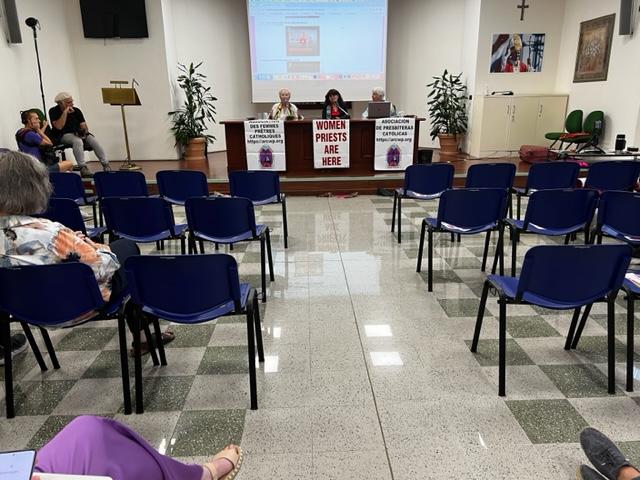
| Greetings from Rome. My friend, Kathleen Ellertson, and I are now in Rome. We drove to St.Peter’s Square where there were thousands of visitors – most in line to see the Sistine Chapel or the Vatican Museum. But many were also there to support the Synod and to make their special causes known to the delegates. If you didn’t know the Church is a global community, being here in Rome makes it clear beyond a doubt. Instead of taking place in the traditional synod hall, the delegates are gathering in the larger Pope Paul VI Hall. Our first stop was to find the Holy See Press Office called the Sala Stampa della Santa Sede. For the sake of the Synod, the office had temporarily moved to be closer to the action. Michael Centore, a member of our team and the editor of Todays American Catholic online magazine, has been granted remote access to the Vatican briefings but the office was reluctant to allow one more person to have access to the hearings even though I’m the one physically present. The office is “talking it over” and considering whether they’ll allow me inside. I’ll keep you posted. The word we have is that the press conferences are sharing little information about the inner workings of the Synod due to the papal secrecy policy where, in this instance, the delegates are advised not to share what others have said nor what they personally contributed to the discernment process. We next headed to Casa Bonus Pastor, the meeting place for reformers and the place where the Spirit Unbounded presentations are taking place. The Association of Roman Catholic Women Priests (ARCWP) was holding a gathering. Three of the heads of this organization conducted the gathering. Mary Margaret Meehan, whom I interviewed on our CCRI podcast series, was one of the leaders. Walking into the room, I immediately saw many of the reformers I’ve come to know from previous trips to Rome and those we’ve been meeting with on Zoom. We exchanged hugs with Virginia Saldanha, Kate McElwee, Christina Reymer, Miriam Duignan, Christian Weisner, Mary Margaret Moser, and met so many others. |
 |
| I immediately saw many of the reformers I’ve come to know from previous trips to Rome and those we’ve been meeting with on Zoom. We exchanged hugs with Virginia Saldanha, Kate McElwee, Christina Reymer, Miriam Duignan, Christian Weisner, Mary Margaret Moser, and met so many others. Following the meeting portion, they led what they called a Liturgy of Lament, Resistance, and Healing. |
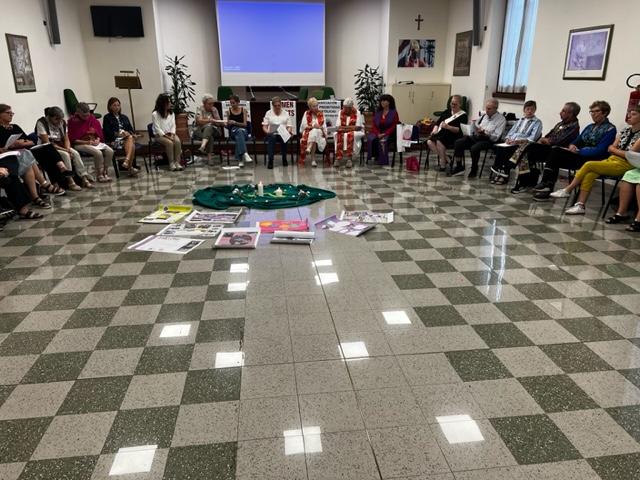 |
| This liturgy was created by Teresa and Cathy Corbitt with Catholic Women’s Council. Sitting in a large circle with several of the women priests in full garb, we prayed as we lamented: For every woman forbidden to preside at the Eucharistic table, banned from breaking bread and barred from the offering of the sacred cup; mourning and mercy. For every women who presided at her own supper table, who fed the hungry with good things and succored the lonely with the cup of life: glory and thanksgiving. Standing on the Shoulders was played as we sang along with Joyce Johnson Rousse (Earth Mama) expressing our resistance: I am standing on the shoulders of the ones who came before me I am honored by their passion for our liberty I will stand a little taller, I will work a little longer And my shoulders will be there to hold the ones who follow me. Following the 3rd reading from John 4:3 – 41, Jesus talking to the Samaritan woman, we discovered healing: Whenever women of thought gather…Horizons are stretched wider…Tender-strong eyes open to injustices…There is a solidarity, and a wide embrace…A fulcrum of possibilities which can fell walls, set voices free, illuminate alternatives and heal shattered hopes…Whenever women of spirit gather…There is birthing. There is life, Sisters! Next was the Blessing and Breaking of the Bread: We give grateful thanks for all the women who have gone before us, opening for all of us a path to life. We are thankful for all the women who risked everything they had so that all of us could live in a better, more just world… We become body by sharing the bread. To break bread in solidarity is to be bread for others. Jesus set the example of this at his last supper and asked us to continue this sacred action in remembrance of him and his teaching. Clips of all the women who have brought about change were flashed across the screen: Ruth Bader Ginsburg, Gloria Steinam, Sally Ride, the first woman astronaut, and Melala, the 12-year-old Muslim girl who fought for girl’s rights to be educated. I teared up when Louise de Marillac, the head of my former religious community, was named along with Rosa Parks, Dorothy Day, Michelle Obama, and the women who fought for women’s right to vote. The ceremony closed with our singing “Tell me how to be bread, how to be food, that satiates within, that brings peace. Tell me how to be bread, how to be for others at all times food and manna. You who are the bread of life, You who are the light and peace, tell me how to be bread that heals injustice, tell me how to be bread that creates freedom.” In the evening we enjoyed a dinner at Buoni Amici with Robert Mickens, journalist who works with La Croix Int’l. I owe Bob gratitude for having first introduced me to other journalists, papal biologists, Filo Hirota, and Benedict’s butler – the one who served time in the Vatican prison for having released papers to the press that revealed some of the undercover issues going on among the higher ranks. Later, just before resigning his papacy, Benedict pardoned his butler, realizing that what he did was for the good of the Church and out of his love and concern for his pope. You can’t help but be impressed by Bob’s depth of knowledge about Francis and the inner workings of the Vatican. While he remains hopeful, Bob is a realist who sees both the strengths and weaknesses of Francis. He feels he will likely follow in Benedict’s footsteps and resign to set a precedent for future popes so that this becomes the norm. No one knows where this Synod will lead the Church, but the ultimate outcome will likely be left to the workings of the Spirit and the next pope to come after him. To learn what’s happening at the Vatican tomorrow, tune into our website. Keep up with up-to-the-minute reports of what’s going on with the Synod in Rome by clicking on www.CatholicChurchReformIntl.org. You will find Spirit Unbounded events, Vatican Briefing Podcasts, and Vatican press briefs of what the Synod delegates are discussing. Even if you’re at home, you can stay involved in the once-in-a-lifetime event that promises to change the Catholic Church in significant ways. |
Join in the Spirit Unbounded events taking place virtually online and physically in Rome Italy and Bristol UK
To join click on
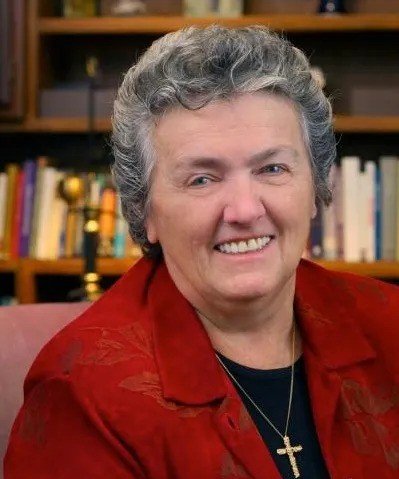
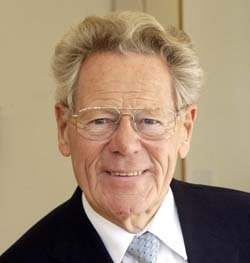
All of us working with Root & Branch are thrilled that Dr. Mary McAleese, former President of Ireland and Canon Lawyer, Benedictine Sr. Joan Chittister, one of the world’s foremost spiritual speakers and writers, and Steven Newcomb, Shawnee-Lenape author of ‘Pagans in the Promised Land’ and scholar of the Doctrine of Discovery/Domination will headline live for us in Rome and Bristol.
SR JOAN CHITTISTER
Sr Joan Chittister, OSB, is one of the most influential religious and social leaders of our time. For over 50 years she has passionately advocated on behalf of peace, human rights, women’s issues, and monastic and church renewal.
A Benedictine sister of Lake Erie, she is an international lecturer and award-winning author of 60 books. An articulate social analyst and influential religious leader, she is courageous, passionate, and a much sought-after speaker, commentator, counsellor and clear voice across all religions.
DR MARY MCALEESE
Dr Mary McAleese was two term President of Ireland from 1997 to 2011. The theme of her presidency was Building Bridges and working for peace and reconciliation. She is a leading critic of Catholic Church teaching on among other things, women, homosexuality, Church members’ human rights, children’s rights, corporal punishment, church governance and episcopal accountability. Broadcaster and academic lawyer, she has a licentiate and doctorate in Canon Law.
STEVEN NEWCOMB
Steven T. Newcomb (Shawnee, Lenape) is a scholar, educator, author and film producer focusing on inter-generational trauma, cultural survival. Newcomb is co-founder and director of the Indigenous Law Institute and director of Original Nations Advocates. He is internationally recognized for his more than three decades of research and writing on the Vatican papal bulls of the fifteenth century. His primary focus is the theological doctrine now commonly known as the Doctrine of Christian Discovery and Domination.
To watch the trailer, click on
To purchase your virtual or physical tickets, click on
Your donations are most appreciated
YOUR GIFT – IN ANY AMOUNT – IS PRICELESS
When you make a donation to support our cause, you join with others who are investing in restoring our Church to what Jesus intended. If you are part of the movement to stop contributing to your local parish and/or diocese, you may want to take advantage of the end-of-year tax deductions by contributing to CCRI in its stead. The dollars we receive are used to run our programs and to reach a broad spectrum of the People of God. We are focused on reaching out to the Faithful, reform activists, young adults as well as those who feel abandoned by the Church, to mention just a few. Your personal contributions in offering your suggestions and your donations are most appreciated.
We have a good grasp of what we’re up against while still trusting the Spirit to guide this synodal process. Looking forward to coming together with all of you and those to whom you extend an invitation.
On behalf of the CCRI Strategy Team,
Rene Reid
CCRI director