September 24, 2024
Click here to listen to the YouTube recording of this presentation.
The 2023 Synthesis Report encourages more involvement of the laity and the entire community in discernment and decision making within their own community. To further explore this topic, this was a panel presentation on just three of the ways for the laity to participate in the decision-making in their community and sharing best practices where this is already being implemented. Use your imagination to envision other countless ministries that could be developed as ways to serve the needs of the community. This panel presentation was facilitated by Dr. Luca Badini Confalonieri, director of research at the Wijngaards Institute for Catholic Research. This is a part of a series of online international presentations being hosted by global reform leaders.
Diocesan and parish councils
with a deliberative voice in decision-making
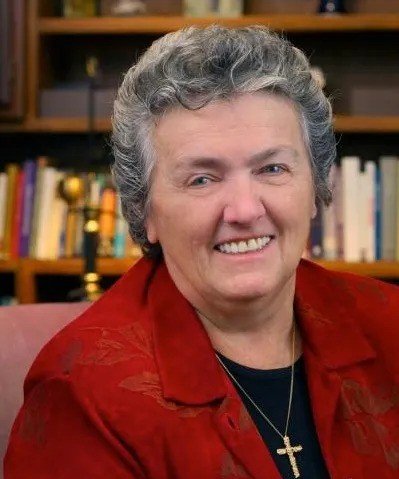
This was presented by Sister Donna Ciangio, Chancellor in the Newark Archdiocese under Cardinal Joseph Tobin. Her PowerPoint presentation can be seen here:
It is recommended that networks of Parish Pastoral Councils be established at the level of small and base Christian communities, parishes and deaneries, right up to the diocesan pastoral Council. As a model of consultation and listening, it is proposed that Church assemblies be held at all levels, trying to widen consultation to include ecumenically the contribution of other Churches and ecclesial Communities. This might include other religions present in the local context and of society with which the Christian community journeys.
Diocesan Council
Using the Archdiocese of Newark New Jersey as an example, its goal is to be a Synodal Church where all listen, learn, share vision and mission, and make the Gospel real in peoples’ lives. The Archdiocesan Pastoral Council is an advisory body to the archbishop comprised of lay persons, priests, deacons and religious, representing the four counties of the archdiocese and the diversity of its people. Members of the Council have opportunities to listen to what the people of the archdiocese are saying and represent that to the archbishop. The Council, together with the archbishop, investigates, considers, and proposes practical conclusions about things which pertain to pastoral works in the diocese. This is done in a spirit of prayer, study, reflection, consultation, collaboration, and discernment. The council serves as an advisory group for the archbishop as members listen to the people and make suggestions that support and carry out the missionary activity of the vision, plans, and programs of the archdiocese, and to assess needs, determine priorities, and suggest new ministries or programs as needed.
Membership includes some from Parish Pastoral Councils, represents counties, ethnic and cultural groups, and includes a span of ages and generations. Nominees are presented to the archbishop who officially appoints them. Prior to each meeting, members have an assignment to research who is doing what with regard to the synod, the needs in deaneries for future planning, sharing resources, etc. They share findings with the archbishop, who in turn shares his desires for the archdiocese and the critical needs he sees, always asking for their input.
Parish Pastoral Council
The role of the members is to lead the parish in the discernment and expression of its mission by creating and enhancing its vision and mission. Carrying out its mission for the clergy and people to walk together (synodality), the main mission of councils is to support continuity, identify parish or diocesan successes and needs, and create the pastoral plan for how we communicate the Gospel and provide the environment for encounter with Christ. The members are there to offer support to the pastor and to offer ideas that will move the parish forward. Their role is to listen to all people, to share back to the pastor the community’s joys, sorrows, griefs and anxieties, their ideas, successes, their need for change, and their expressions of prayer and relationship with Christ. Members assist in ways to build up the faith community that serves the larger community. This includes having a Welcoming, Hospitality and Outreach committee. Membership includes the pastor, staff member(s), 12 to 15 parishioners and a member of the finance committee to ensure that adequate resources are available for the ministries to function well.
If you are just beginning, candidates can be recommended to the pastor by staff and/or key lay leaders. Some parishes gather a team to choose and recommend candidates. Candidates are recommended by current council or others to the pastor during the spring meetings. At Mass or through the website, you can ask for nominations of possible members – those people see as leaders. PPC Members can suggest and discern nominations that should be from various age groups, ethnic, or language groups, etc. The pastor or chairperson ratifies and invites new members from the prioritized list.
The pastor and a representative of the finance committee are always on the committee, and possibly a staff member. Members serve for staggered three year periods (calendar years September 1 – August 31). The chairperson (one year term, renewable); the secretary (one year term, renewable); the timekeeper (rotating role). Meetings are held monthly along with half day meetings one or two times a year for in-depth planning and review. Decisions are made by consensus. The Council communicates to the parish through the parish bulletin, website, Facebook, and other ways selected by the Council. Ensure that parishioners know who the PPC and finance council members and receive a summary of PPC meetings. The Parish Pastoral Guidelines manual (scroll down) of the Archdiocese of Newark is designed to help parishes develop their councils to surface and guide the pastoral planning and ministry needs of the local area. The free manual begins with an introduction from Cardinal Tobin on the importance of parish pastoral councils followed by six chapters: Articles of Understanding, Leading Meetings Effectively, Exploring a Consultative Model, The Consensus Process, Resolving Conflicts, and Decision Making: A Way Forward. The Appendix contains prayers and sample agenda to help plan meetings. These guidelines are designed so that the contents can be updated and revised on an ongoing basis.
The Lay Ecclesial Ministry
of Coordinating a Small Church Community
This was presented by Fr. Joe Healey, an American Maryknoll missionary priest who served in Eastern Africa for 54 years (1968 – 2022). Presently he is based in New Jersey, USA and doing full time Internet Ministry. He has researched and written on Small Christian Communities (SCCs) for many years. He began by quoting from the 2024 working document with all references to Small Christian Communities:
No. 7. “Synodality works through the [local] community listening to the Word of God.”
No. 29. “Men and women who exercise the ministry of coordinating a Small Church Community.”
No. 89. “The contributions submitted by the Episcopal Conferences speak of Parishes, Base Christian Communities and Small Christian Communities as contexts of communion and participation in mission…The parish is understood as a community of communities in the service of missionary creativity.”
No. 94. “Creating networks of Pastoral Councils at the level of Base Christian Communities, Small Christian Communities, Parishes and Deaneries right up to the Diocesan Pastoral Council.” l of Base Christian Communities, Small Christian Communities, Parishes and Deaneries right up to the Diocesan Pastoral Council.”
This term, Small Christian Communities (SCCs), is clearly implied but NOT actually stated in the documents of the historic Second Vatican Council (1962-65) nor in the revised 1983 Code of Canon Law. Even so, they are indirectly referred to in the section on Structures under the “People of God.” The Local Churches have the freedom to carry out pastoral work in parishes on the local level following their own structures and activities. This is described as the “ordering of the parish on the most local levels.” In the SCCs Model of Church in Eastern Africa (the nine AMECEA countries of Eritrea, Ethiopia, Kenya, Malawi, South Sudan, Sudan, Tanzania, Uganda and Zambia), the SCC is an official pastoral, ecclesial structure in the parish. The SCCs officially participate in the parish leadership structures. Each SCC (or a group of SCCs) has a representative on the Parish Pastoral Council. Elections start at the level of SCCs and move upwards. This insures that the Parish Pastoral Council leaders are chosen from those lay people who are already leaders in their SCCs – thus true representation from below. Presently there are more than 195,000 SCCs in Eastern Africa.
In Eastern Africa (AMECEA countries) we have a long history of changes in the name.Our preferred wording right now is: Small Christian Community/Small Church Community/Basic Christian Community and the local equivalents. The 20 theologians who drafted the Instrumentum Laboris also chose the name “Coordinator” as the name for the leader of a SCC. We were asked to give feedback on the language and meaning of this new minister: “Coordinator of a Small Church Community.” After a lot of discussion and discernment SCC members in Eastern Africa chose “Animator” as the best title. When we get official documents from the Vatican, we wonder if the people responsible really know what is going on in the Global South, that is, the countries of Latin America, Africa and Asia. For example, developing new ministries in SCCs is not new. We have been doing it for years in Eastern Africa based on our local, grassroot pastoral experience. The “Appendix” of our free online Ebook, Building the Church as Family of God: Evaluation of Small Christian Communities in Eastern Africa, has a section on “Lay Ecclesial Ministries in Small Christian Communities in Eastern Africa.” Over the years in Eastern Africa, they have evolved in responding to the contemporary signs of the times. After Vatican II for many years in the Catholic Church there was a lively debate about the use and meaning of the word “ministry.” Certain people did not want to use the name “minister” for a lay person, but it is widely accepted now. The popular usage today includes the legitimacy and importance of non-ordained lay ecclesial ministries officially recognized by the Catholic Church. In some cases, there is even an official installation or induction.
There are various leadership models, types, and styles of lay ministry. In the spirit of being a new way of being and becoming church, the emphasis is on service rather than authority, especially servant leadership. A lay minister is not a boss but a servant of the servants. There are two distinct roles. Sometimes this lay ministry is to animate, facilitate and coordinate activities within the SCC. Sometimes this lay ministry represents the SCC at the sub-parish and parish levels. The Executive Committee consists of the Chairperson, Vice-Chairperson, Secretary and Treasurer. Often the Chairperson and Secretary represent the SCC on the Parish Pastoral Council.
Specific lay ecclesial ministries go by many different names, types, and responsibilities. One SCC member may be responsible for more than one ministry. Thirty-one ecclesial ministries in SCCs are listed in the “Appendix” of our Ebook.” Two examples: Healing Minister, although not common, some SCCs choose one designated lay person to pray over and lay hands on the sick. Another is Marriage Ministers that goes by many names. Ideally this is a committed, experienced Catholic lay couple who serve as Single Mother Pastoral Accompanier, Marriage Animators (before and after marriage), and Marriage Counselor(after marriage). As we move ahead in developing new lay ministries in the Synodal Process in the Catholic Church, we live out the Spanish proverb used around the world: We create the path by walking.
One suggestion that came from this panel in the discussion afterwards is the importance of having a lay minister to assist divorced/remarried couples through the process of returning to the Sacraments and once again being able to receive Holy Communion.
Small Christian Communities in Europe,
from import to homegrown local Church development
This was presented by Fr. Max Stetter, Diocesan Priest, Augsburg/Germany, having spent 25 years as missionary in East Africa. He has been a promoter of Small Christian Communities in rural settings (Mityana, Uganda) and urban industrial settings (Thika, Kenya). While there, Fr. Max saw that the people loved their experience in Small Christian Communities and saw this as the way forward for being Church. After his return to his home diocese in a German parish, he experienced an entirely different atmosphere. People were not as open to the SCC experience.
As the Church began to show cracks in its system, the Second Vatican Council rediscovered the Church as the People of God, a community of believers, emphasizing their common priesthood as the right and duty of all the baptized.
In the 1970s and ‘80s, the international community of German speaking grassroot communities began to be formed. Their topics were spirituality, theology, social justice, sustainability, environmental awareness and
ethical issues like homosexuality. Other religions and cultures were openly discussed, but this was not seen as favorable by the Church hierarchy. It was an initiative „before its time“ and began to fade out.
By the 2000s, the mission institutions of the Church in Germany (missio Munich and missio Aachen), inspired by international pastoral pioneers, began to promote Small Christian Communities as new way of being Church. They sponsored exchange programs with Lumko (South Africa), Bukal (Philippines), AsIPA (Asia).
An idea to put forth to the synod delegates is the vision of Fritz Lobinger, a German missionary priest (Fidei donum), responsible for Lumko Missiological Institute, who became a bishop in South Africa. He early saw the need in some parts of the world Church for small communities to prepare for ordination a team of elders who would lead their communities and celebrate Eucharist with them. This plan follows the pastoral intuition of St Paul in the early Church. These ordained elders would work only in their own community and be overseen by ordained animator priests. This concept would lead away from the traditional dependence on the sole parish priest and replace it with a team of ordained elders. With this plan, there would be no Eucharistic famine. The idea of having two forms of priesthood – ordained elders and ordained animator priests – deserves serious consideration. This concept has inspired FABC, the Federation of Asian Bishops Conferences to initiate AsIPA, Asian Integral Pastoral Approach, with an emphasis on building SCCs.
A leading European diocese in France, Poitiers began a journey of faith, a long and systematically-planned, theologically and spiritually-based path of renewal by emphasizing baptismal dignity through the Sacraments of Initiation. The approach is based on the understanding of the Church by Vatican II. The pastoral task is based on building up the community and ensuring that the local Church remains alive. The Poitiers model has been alive since 1995, based on Canon 516 §1 CIC: “Unless the law provides otherwise, the quasi-parish which is a specific community of believers in a particular Church and is entrusted to a priest as its own pastor, but which has not yet been established as a parish due to special circumstances, is equated with the parish.”
It is about opening up new possibilities for being Church. Bishop Rouet of Poitiers went through his diocese with many small parishes. Instead of conglomerating them because of lack of priests, he insisted that the role of these local communities were not to help the priest but to live and proclaim the faith. ‘Equipes of animation’ consist of 5 people, plus an overall coordinator and treasurer with the only requirement being baptism. The team is appointed for 3 years with the possibility of a one-time renewal. The founding of a team takes place in the local Church by the bishop. It is about the participation of lay people in the mission of the Church in their own way, i.e. not as a substitute or competition for priests but according to their own vocation.
This vision of Church challenges a practice of pastoral pioneers who invite to their dioceses best practice clerics and laypeople from the world Church who envisage a participative synodal Church, while at the same time local Bishops import droves of priests from the same world Church to maintain the traditional clerical system.
Small Christian Communities in Asia
Bibiana Joo-hyun Roh is the former Executive Secretary of the Asian Integral Pastoral Approach (AsIPA) Desk of the Office of Laity and Family of the Federation of Asian Bishops’ Conferences(FABC), and a member of the committee for SCCs of the Catholic Bishops’ Conference of Korea.
Her presentation was a synthesis of recent stories and the current situation of SCCs in Asia as reported by SCCs coordinators from various countries and dioceses in Asia. Her PowerPoint presentation can be seen here:
The FABC has inspired and guided the local churches in Asia to implement ‘communion of communities’ and the spirit of the Second Vatican Council through SCCs since the 1990s. SCCs have been promoted in most local Churches in Asia. National teams promoting SCCs exist in seven countries. There are numerous diocesan teams for SCCs in most countries in Asia.
SCCs make significant contributions by empowering the laity to fulfill their baptismal responsibilities and renewing parish pastoral structures from the bottom up. They also enhance the growth and transmission of faith, provide fields for lay formation, and foster interfaith dialogue and social outreach activities. Looking ahead, the future of SCCs/BECs in Asia involves increasing active lay participation, continuous formation for clergy and laity, and expanding the scope of SCCs to include basic human, ecological, and digital aspects.
Lay Ecclesial Ministry of Homilists
This was presented by Betty Anne Donnelly, co-founder and preaching coordinator for Catholic Women Preach. She is the co-editor with Russ Petrus of Future Church of the three-volume cycle, Catholic Women Preach, Raising Voices, Renewing the Church, which covers all cycles (A, B, C) of the Church year. These can be purchased from Orbis or Amazon. Betty Anne reported that they have posted 490 short homilies (5 – 7 minutes) on their website. To access them, go to www.CatholicWomenPreach.org. This features the most recent homilies posted at least 2-weeks in advance of a given Sunday or holy day. To find the rest, you can search by scripture reference, key words, or the preacher’s name. On the website, you can also access a copy of the Synodal Preaching Guide. It is a short practical guide for synodal preaching including how to choose preachers. [In the 2023 Synthesis, one of the recommendations is to expand the lector committee designed to appoint readers to also include selecting homilists from within or without the community.]
Betty Anne was invited to a seminal conference at Aquinas Theological Institute in St. Louis last March where 30 women and men gathered with the goal to provide the Synod office in Rome theological justification and concrete language for a proposed change in canon law to permit adequately trained lay people to preach the homily at the Eucharist. Liturgical Press will be publishing the proceedings of this conference. It will be entitled “Lay Eucharistic Preaching in a Synodal Catholic Church” and has been sent to the Synod office for consideration. Paragraph 18 of the working document for the 2024 Synod states: “Many of the demands expressed above also apply to laymen, whose lack of participation in the life of the Church is often lamented. In general, reflection on the role of women often highlights the desire to strengthen all the ministries exercised by the laity (men and women). There is also a call for adequately trained lay men and women to contribute to preaching the Word of God, including during the celebration of the Eucharist.” Guides have been provided on determining who has the gift of preaching. Discerning Deacons is collaborating with St. Mary’s College to offer certificate training programs in preaching. Anyone interested is encouraged to explore the rich amount of material available online to prepare one for preaching. For example, the Clough School of Theology and Ministry at Boston College is offering a 4-week program entitled “Effective Preaching, Homily Preparation, available Oct. 16 through Nov. 12 for just $30. Betty Anne is most encouraged that the Synod is open to discussing effective lay preaching.
Your donations are most appreciated
YOUR GIFT – IN ANY AMOUNT – IS PRICELESS
When you make a donation to support our cause, you join with others who are investing in restoring our Church to what Jesus intended. The dollars we receive are used to run our programs and to reach a broad spectrum of the People of God. We are focused on reaching out to the Faithful, reform activists, young adults as well as those who feel abandoned by the Church, to mention just a few. Your personal contributions in offering your suggestions and your donations are most appreciated.
We have begun to genuinely join our voices together behaving as a synodal Church. Let us now stay abreast of what is happening with each stage of the Synod from now through 2024 and beyond. The real work of becoming a synodal Church is still ahead of us. It is crucial that we stay involved in the process. We will keep you informed and continue to gather online as a community.
On behalf of the CCRI steering committee,
Rene Reid, CCRI director